


Effective B2B promotional items guide
A tote bag handed out at a trade show and forgotten on the way out doesn't carry the same value as a water bottle used every day at the office. That is exactly the starting point of this B2B promotional items guide: in business, the right item is not the one that looks appealing in a catalogue, but the one that serves a specific objective, at a controlled cost and with a result consistent with your brand image.
Purchases of personalised promotional items and textiles are often handled in a hurry. You need to kit out a team, prepare an event, launch a campaign or supply merchandise without losing time across several suppliers. The real challenge, then, is not simply to personalise a product. It is to choose the right item, the right printing technique and the right quantity to avoid any gap between the initial need and the final result.
B2B promotional items guide: start from the use, not the product
The most common reflex is to start with the catalogue. In practice, it is better to start with the situation of use. A promotional item handed out at reception, offered during a sales meeting, given away at a trade show or used by your own teams does not face the same constraints.
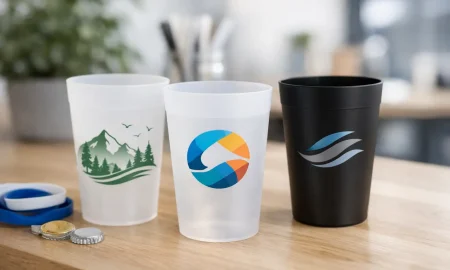
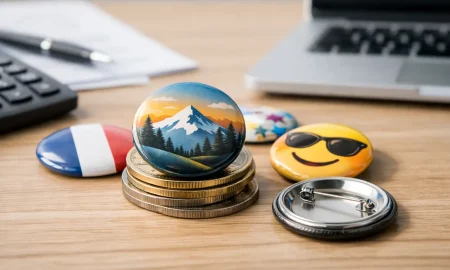
For a mass visibility operation, simple products that are easy to distribute often remain the most effective. Stickers, magnets, pens or tote bags work well because they combine an affordable cost, a useful printable surface and bulk ordering. Conversely, for a client or partner gift, a mug, a water bottle or a notebook generally creates a more lasting impression.
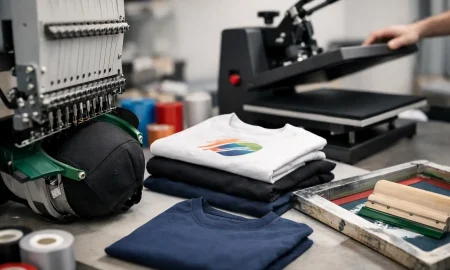
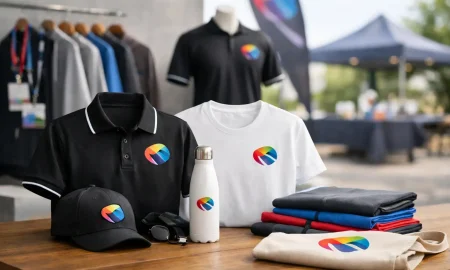
Textiles deserve a case of their own. A t-shirt, a polo shirt or a personalised sweatshirt can be used to identify a team, standardise a presence at an event or create a reusable brand item. But here, the choice is not limited to the visual. The cut, the fabric weight, the garment colour and the printing technique directly influence the perceived result.
Choosing the right item for your objective
In B2B, a promotional item does not need to be original at all costs. It must be useful, visible and profitable. This is why the same product can be excellent in one context and mediocre in another.
For a trade show or event
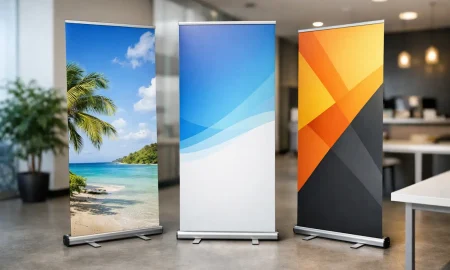
At a trade show, the logic is simple: you need items that are easy to carry, quick to hand out and visible enough to extend the contact after the exchange. Tote bags, stickers, pens, name badges, notebooks and roll-up banners suit this use well. Budget matters, because quantities rise quickly. In this case, volume-based pricing becomes a real lever, not just a commercial argument.
For team kitting
When staff need to be dressed in a shop, an association, a school or at an event, textiles take the lead. T-shirts, polo shirts and sweatshirts allow immediate identification. Here, the priority is consistency of printing and ease of restocking. If you need to reorder the same product a few weeks later, you must be able to easily find a reference, a visual and a consistent quality level.
For a client gift
For a more qualitative relationship, it is better to opt for items that are genuinely kept. A well-printed water bottle, an office mug or a personalised notebook will often have more impact than an overly generic promotional item. The point to watch is the balance between perceived value and your mailing volume. A premium item is relevant if the targeting is narrow. It is much less so for a very broad distribution.
Budget is not just about the unit price
This is often where mistakes begin. In B2B purchasing, comparing two products on unit price has limited value. The true cost depends on quantity, printing technique, number of colours, print area size and the lead time requested.
A cheap product can become less attractive if it offers too little personalisation area or a result that weakens your image. Conversely, a slightly more expensive item can better absorb your budget if it stays visible for longer or avoids a second rushed order.
You should also consider the logic of volume. A grouped order for a national event, several points of sale or several dates can be far more cost-effective than a series of small separate orders. Quantity discounts make sense when they match a genuine frequency of use, not when they push you to store unnecessary products.
Printing, support and visual: the trio that determines the result
A good promotional item that is poorly printed immediately loses its value. In practice, the perceived quality depends less on the file alone than on the match between visual, support and marking process.
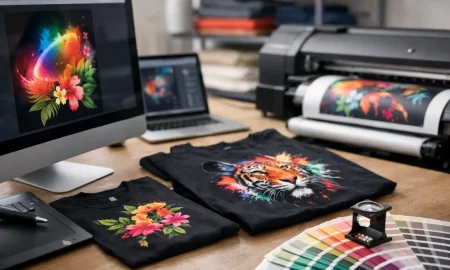
On textiles, for example, a highly detailed logo will not look the same whether it is printed on a t-shirt, a sweatshirt or a tote bag. The size of the print, the contrast with the garment colour and the fineness of graphic details matter as much as the quality of the source artwork. The file must therefore be adapted to the product, not the same visual simply pasted everywhere.
This is also why it is better to work with a supplier that truly controls its production. When printing is done in-house, adjustments are faster, technical constraints are better anticipated and lead times are generally clearer. For a professional buyer, this reduces back-and-forth and limits unpleasant surprises at delivery.
The specific case of personalised textiles
Textiles are often decisive in a B2B strategy because they combine visibility and internal use. However, they require more attention than a mug or a sticker. The result varies depending on the material, the colour of the garment, the placement of the visual and the intensity of intended use.
If your goal is to kit out a team for a three-day trade show, the main criterion will not be the same as for a garment meant to be worn every week. In one case, you are mainly looking for immediate visibility. In the other, durability and comfort carry more weight. It is also worth stating a simple point: not all textile personalisation relies on the same techniques, and embroidery is not always offered depending on the workshop. It is best to confirm from the outset that your need is compatible with the processes actually available.
How to avoid the most common mistakes
The first mistake is ordering too late. In B2B, urgency often costs more and leaves less room to correct a visual, adjust a size or revise a quantity. The tighter your deadline, the more your options shrink.
The second mistake is trying to do everything with a single product. A pen does not serve the same purpose as a t-shirt or a roll-up banner. An effective campaign often combines several complementary items: textiles for the team, promotional items for visitors, and signage to catch attention.
The third mistake is underestimating legibility. A small, complex logo, text that is too thin or weak contrast will give a disappointing result even on a good product. In print communication, clarity almost always beats sophistication.
Simple method for ordering well
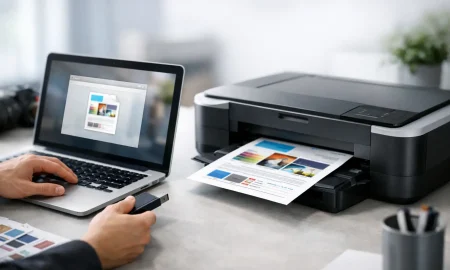
The most effective approach is to proceed in this order: define the use, set the quantity, choose the item, adapt the design, then confirm the lead time. This logic prevents starting from an attractive but unsuitable product.
For an SME, an association or an event organiser, the benefit of an online personalisation tool is obvious: you save time and quickly visualise your project. But this simplicity must be backed by a genuine production framework. At a company like Geekmonkey, the value of in-house manufacturing in Belgium lies not only in speed. It also matters for consistency of execution, responsiveness on volumes and the ability to handle both single-unit needs and larger runs.
The right B2B promotional item is one that gets circulated
A good item is not necessarily the most creative or the most expensive. It is the one that stays visible, fits easily with your use and respects your budget without complicating your order. In this B2B promotional items guide, the guiding thread remains the same: start from the real need, choose a coherent item and secure the printing before thinking about the catalogue effect.
If you have to choose between several options, ask yourself a simple question: will this product actually be used, worn, kept or seen more than once? This is often where the difference lies between a marketing expense and a profitable communication tool.
Share this post
Author




Leave a Reply