


Personalised promotional items in small quantities
Ordering personalised promotional items in small quantities is no longer a fallback option. For a trade show, a shop opening, an open day or a local campaign, a small run is often the most cost-effective format. It lets you produce exactly what you need, when you need it, without tying up budget or storing boxes of unused stock.
This approach appeals to a growing number of organisations that want to move quickly and stay flexible. A school preparing an annual event, an association testing a design, an SME equipping its sales team or a retailer launching a seasonal promotion does not always need hundreds of items. What they need above all is a personalised product that is simple to order, consistent with their image and delivered within a realistic timeframe.
Why choose personalised promotional items in small quantities
Small quantities address a very practical concern first: avoiding overstock. When you order too much, you pay more than necessary, take up space and risk ending up with outdated products if the logo, message or date changes. A small run, by contrast, lets you adjust the volume precisely to actual use.
It is also a good way to test. Before placing a larger order, many professionals prefer to validate a product, a colour, a print method or a slogan. A tote bag that works well at a trade show can then be reordered in volume. A sticker handed out in store can serve as a trial before a wider campaign. A small quantity therefore becomes a management tool, not just a stopgap.
There is finally an obvious budget advantage. Even though the unit price is often lower on large volumes, the overall spend is lighter on a short run. For a one-off operation, this is often the deciding factor.
Which products suit small runs best
Not all items respond in the same way to a small order. Some products are naturally suited to small quantities because they are quick to personalise, easy to produce and useful in many contexts.
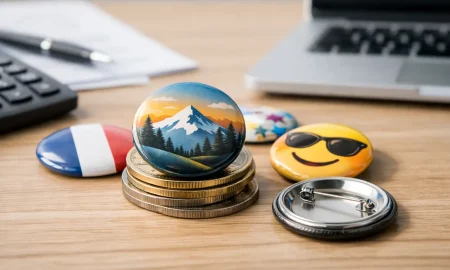
Badges, magnets and stickers are among the simplest formats to launch. They work very well for events, association fundraising, awareness campaigns or distribution at points of contact. They are also affordable, which reduces the risk when you are testing a design.
Mugs, water bottles, notebooks and tote bags work well when you are looking for a more durable item. They are often chosen as client gifts, welcome packs, training kits or HR initiatives. In small runs, they allow you to create a useful set of items without falling into generic giveaway territory.
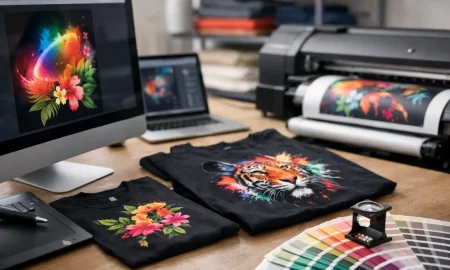
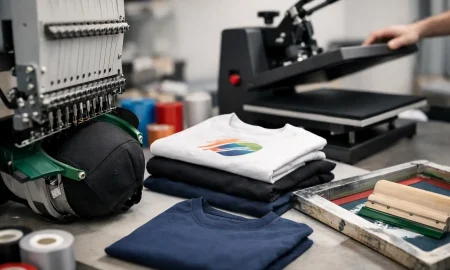
On the textile side, T-shirts, sweatshirts and polo shirts are ideal for kitting out a team at a trade show, a sales promotion, a festival or a sporting event. Here, small quantities are common because needs are often tied to specific sizes and a defined number of participants. Ordering too many is rarely a good idea.
Personalised promotional items in small quantities: when is it the right choice
The most common case is events. A two-day trade show does not require the same stock as an annual campaign. Producing a small run lets you match the quantity to expected footfall, the number of planned meetings and the type of distribution. If the aim is to hand a premium goodie to 50 qualified prospects, there is no need to order 500.
Another frequent case is a launch. A new visual identity, a new service, a store opening or a limited edition often justifies a first short order. This lets you check the real result before rolling out the item across other channels.
Small quantities are also relevant for multi-site organisations or teams with variable needs. A local agency, a regional association branch or a small town does not always need the same stock as a head office. Producing just what is needed avoids uneven consumption and complicated redistribution.
What to check before ordering
The first thing to verify is how the product will actually be used. An item distributed in large numbers should remain simple, visible and economical. An item given to a client or partner can be of higher quality. This distinction changes everything, as it influences the product, the printing technique and the budget.
The artwork matters just as much. With small runs, there is often a temptation to personalise more. This is possible, but a logo that is too fine, a low-resolution image or poorly prepared colours can harm the final result. A clean, legible print is better than an ambitious file that does not suit the product.
Lead time is the other decisive variable. Fast production requires a ready file, clear quantities and a product that fits the schedule. If your deadline is tight, favour items that are easy to launch rather than those requiring specific sourcing or finishing.
Small quantity does not mean compromising on quality
This is often misunderstood. A small run is not necessarily an entry-level product. On the contrary, it can deliver a very good finish if the product and technique are well chosen. The difference lies mainly in preparation and control of production.
For textiles, for example, the right choice depends on the number of colours, the fabric and the intended use. For a simple design on a few pieces, certain techniques are perfectly suitable. For a more durable finish or a very specific colour, you sometimes have to make different trade-offs. It is not a question of better or worse, but of compatibility between need, design and volume.
On rigid items such as mugs, water bottles or badges, the final result depends largely on the printable surface, the contrast of the design and the precision of the file. A small quantity lets you stay demanding on these elements without launching an excessive run.
The real calculation: unit cost or useful cost
Many buyers first compare the price per unit. This is natural, but it is not always the right reflex. For personalised promotional items in small quantities, the better measure is often the useful cost, in other words, how much a order costs when it is actually used, distributed and relevant to your objective.
A run of 80 tote bags handed out at a targeted event can be more effective than a stock of 500 pens, part of which will remain in storage. A set of 30 well-chosen polo shirts for a visible team can generate more impact than a larger, less suitable order managed in a hurry.
This is where a well-designed online ordering process makes the difference. If the personalisation tool is simple, prices are clear and production is well controlled, you can decide quickly and order without wasting time on unnecessary back-and-forth. This is precisely what professionals who need efficiency above all are looking for.
How to Properly Prepare Your Small-Batch Order
The most effective method is also the simplest. Start by defining the exact use of the product, then the real number of units you need. Add a small margin if the event may bring unforeseen issues, but avoid the reflex of overstocking.
Next, prepare a clean visual. A vectorised logo or a high-definition file saves time and limits unpleasant surprises. If you are torn between several products, compare their practical usefulness rather than their looks alone. A notebook is often kept for longer than a flyer, a badge is more visible than a pen, and a tote bag is more valued than a simple disposable bag.
Finally, align the product with your context. For a field operation, favour items that are easy to carry and hand out. For a corporate gift, focus more on the perceived quality. For team identification, opt for comfortable, legible textiles.
A flexible solution for real needs
A small batch is not a scaled-down version of a large order. It is a response tailored to very specific needs: testing, launching, equipping, distributing, identifying or thanking, without unnecessary complexity. For many organisations, it is even the most logical format.
At Geekmonkey, this logic makes perfect sense when online personalisation, in-house production and controlled lead times let you move quickly from a one-off need to a usable order. When the process is clear, a small quantity becomes a real communication lever.
If you need to decide, ask yourself a simple question: how many items will actually be useful in the coming days or weeks? That answer often reveals the right quantity.






Leave a Reply